Collagen peptides vs. gelatin: what supplement brands need to know
Hydrolysis, solubility, and application differences — and why halal collagen is one of the fastest-growing ingredient categories.
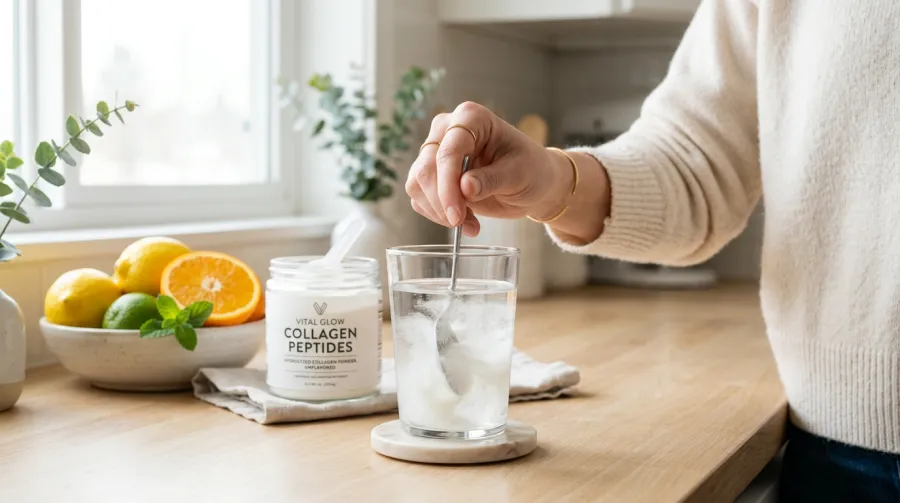
Gelatin and collagen peptides start from the same raw material — collagen — but diverge in processing, function, and market. For supplement brands, the differences determine formulation, labeling, and supply strategy.
The chemistry, briefly
Gelatin is partially hydrolyzed collagen: it gels when cooled, which is exactly what capsules and gummies need. Collagen peptides are further hydrolyzed into short chains that dissolve in cold water and do not gel — ideal for powders, beverages, and formulations where clarity and mixability matter.
Application differences
Choose gelatin when you need structure: capsule shells, gummies, marshmallows, gelled desserts. Choose peptides when you need solubility and a neutral profile: collagen supplement powders, ready-to-mix beverages, functional foods, beauty drinks. Some products use both — a collagen gummy uses gelatin for structure and peptides for the label claim.
Why halal matters more in collagen
Most global collagen supply is porcine or non-certified bovine, which excludes it from halal-compliant products entirely. Certified halal bovine collagen with a documented chain of custody is genuinely scarce — and for brands serving Muslim consumers, provenance is the product. A halal claim that cannot survive an audit is a recall waiting to happen.
If you are reformulating from a non-halal source, match molecular weight range and solubility — done properly, the switch is invisible to your customers.
About the publisher
Published by Kapoor Bioproteins, a Lahore-based supplier and exporter of halal-certified gelatin and collagen — independent per-batch testing, certification verified with its issuing body, complete export documentation. Questions about your application? Ask us or WhatsApp +92 310 5903935.